
SNAP Benefits Renewal and Transition Management System
Client: Boston Community Pediatrics (BCP)
My Role: Design & Project Management, User Research, Workshop Facilitation
The Challenge
Boston Community Pediatrics (BCP) the first nonprofit, pediatric private practice of its kind in Massachusetts. I was embedded in the team as a design lead and project manager for a year.
They wanted to improve how families maintain continuous access to SNAP and WIC benefits. While resources exist, Haitian and Dominican families often face barriers such as:
-
Fear of documentation and government systems
-
Complex, outdated processes for WIC and HIP
-
Language gaps and inaccessible communication
-
Limited follow-up capacity within BCP’s care navigation team
Team
A multidisciplinary group of 14 researchers and designers from MassArt’s M.Des program.
-
User Researcher
-
Product Manager
-
User Experience Designer
-
Head of Product
-
Product Manager
-
Usability Head
-
I also worked closely at times with health practitioners and care navigators.
My responsibilities:
-
Directed project management, task delegation and sprint facilitation
-
Led Shadowing Research Guide development
-
Facilitated the Journey Mapping Workshop
-
Managed stakeholder alignment and design documentation
-
Presented reports to BCP stakeholders
Research, Synthesis, Strategy
Discovery
We began with an in-depth kickoff meeting with BCP’s leadership and care navigation team.
Key questions explored:
What systemic gaps prevent smooth SNAP/WIC renewals?
How can BCP support culturally diverse families with limited staff capacity?
Framing question that emerged was "what can we do to simplify and humanize access to food assistance programs while empowering providers to offer continuous, empathetic support?"
Research combined policy-level understanding with on-the-ground family experiences.
Research Activities I led
3 Interviews with BCP’s Director and Care Navigators
2 Shadowing sessions observing family–provider interactions
Led the Shadowing phase to uncover trust gaps and communication friction.
35+ Reviewed articles, papers, and forums exploring federal guidelines, accessibility, and cultural alignment issues.
Synthesis and findings
After an initial synthesis in google docs, I moved key insights over to a Figma board and worked with team members to group them. I illustrated the key themes, and color coded the insights by source so we could understand which ones cut across categories. Below are the problems BCP patients face; we had a similar one called ‘how BCP helps.’

Key pain points surfaced:
-
Confusing multi-step processes with inconsistent guidance.
-
Distrust and fear among undocumented families.
-
Culturally mismatched nutritional options in WIC.
-
Low awareness and complexity around HIP reimbursements.
-
Overwhelmed users during renewal due to documentation anxiety.
I shared these on a new hires call, and gave everyone access to the Figma board.
We also started a research insights Slack channel, where I posted an ‘insight of the day’ for a period of time. We aimed to socialize our findings and help understand users more.
How BCP works: Journey Map
Because we were offering a support service, it was important to see across the full client journey. After multiple rounds of research, I put together a journey map to clarify our process while highlighting clients’ key questions and pain points. I also noted opportunities where we could intervene to improve their experience. This was a helpful conversation tool for our design team.
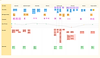
For example:
Pain point: It was not easy for patients to breakdown the complex and hectic snap enrolment information
Opportunities: Simplified visual info and links at one place
Opportunities Identified
We distilled the most critical insights into clear opportunity areas where design could drive tangible change.
Each insight was paired with a “How might we” question to guide ideation.
Navigating Benefits for Mixed-Documentation Families
How might we help families navigate SNAP confidently regardless of documentation status?
Transition Support for Life Changes
How might we redesign the experience for individuals undergoing major life transitions (shelter, income changes) to sustain benefits easily?
Enhancing Awareness and Use of HIP Benefits
How might we communicate HIP benefits clearly and build trust around their use and reimbursement?
Personalized Support for SNAP/HIP Renewals
How might we proactively remind participants about renewals while personalizing support for changing circumstances?
These opportunity areas formed the foundation for our Spring 2025 ideation and prototyping phase with BCP, focusing on culturally responsive, proactive communication and system design.
Impact x Effort matrix
To move from opportunity areas to tangible design directions, I facilitated a collaborative ideation and prioritization workshop. The goal was to translate user insights into feasible, high-impact interventions for BCP’s SNAP and WIC systems.
The team divided into two sub-groups - Life Changes and Renewals each tasked with brainstorming solutions for a specific challenge area. Using a structured Impact × Effort Matrix, both groups evaluated their ideas based on potential benefit, implementation effort, and confidence in success.
This activity helped the team:
Align around measurable success outcomes for BCP and its patients.
Identify quick wins versus strategic initiatives through visual prioritization.
Create an actionable foundation for the prototyping phase.


Product Design
Solution development and Integration
With prioritized ideas in place, we transitioned from research to design execution focusing on creating accessible, high-impact touchpoints for families and providers.
The team’s final direction evolved into a comprehensive digital and print ecosystem designed to make food assistance resources intuitive, human, and integrated with BCP’s existing infrastructure.
Digital platform integration
We developed a site map and content flow for a digital hub embedded within BCP’s main website.
This hub centralizes all information around SNAP, WIC, and HIP, allowing families to:
Access eligibility guides, renewal reminders, and multilingual resources.
Explore step-by-step instructions for enrollment and benefit tracking.
Receive proactive prompts for renewals and life transitions via connected care navigation.
Goal: To make the experience of finding, understanding, and maintaining benefits seamless within BCP’s digital environment reducing dependency on fragmented state portals.

SNAP information in your language, simple and jargon free
Problem: “I get letters and forms, but I don’t understand them. It’s all in English and full of government words, I just stop trying.”
Solution: A multilingual, jargon-free digital guide integrated into BCP’s website that explains SNAP in simple, step-by-step language. Patients can choose their language, understand what each life change means, and see exactly what to do next whether reporting income, moving, or adding a new child. The companion print handouts mirror the same steps for quick, offline reference during clinic visits.

SNAP information in your language, simple and jargon free
Problem: “I never know what affects my SNAP perhaps a new job, moving, or having a baby. I wish someone just told me what to do for my situation.”
Solution: A research-backed, data-informed digital guide that organizes information by major life situations income change, address change, new child, or immigration update. Each topic offers clear, jargon-free steps so families can instantly find what applies to them, understand what it means, and follow simple instructions to stay enrolled and informed.

Print Materials for In-Clinic Access
Alongside the digital hub, we designed print-based tri-fold guides placed in BCP clinics and waiting areas to make information more approachable and engaging.
These materials were developed in English and Spanish, ensuring bilingual accessibility for BCP’s patient population.
Purpose:
Support passive learning for families without easy digital access.
Offer portable, easy-to-read guides for SNAP enrollment and renewal steps.
Reinforce trust and understanding through a clear visual hierarchy, inclusive imagery, and culturally sensitive tone.

Playful and interactive materials
To encourage interaction, each tri-fold included playful activities mini mazes, connect-the-dots, and visual prompts to make the flyers fun, memorable, and less likely to be overlooked in clinic racks.
These small design choices helped transform passive materials into tools for engagement and education.


Experience flow
We built a connected experience that links patients, care navigators, and digital resources into one seamless system.
Patients first see bilingual posters and tri-folds in the clinic, which guide them to the SNAP Support website through QR codes.
After appointments, care navigators reinforce access by texting or emailing the same link.
On the website, families find simple, step-by-step instructions tailored to real-life situations like moving or income changes creating a consistent, accessible support loop across print and digital touchpoints.

Team Leadership
Over the course of the project, I led cross-functional coordination between 14 researchers and designers, ensuring alignment across research, design, and client communication. I contributed to shaping the project roadmap and strategy, facilitated weekly sprint reviews, and presented research insights and prototypes to BCP’s leadership team.
I also organized and co-led a week-long design workshop, guiding ideation sessions in Figjam, managing breakout groups, and consolidating team inputs into a unified framework.
Outcome
Delivered a unified SNAP Support ecosystem (web, print, and in-clinic) that simplifies benefit access for multilingual families.
Created a jargon-free, step-by-step digital guide integrated with BCP’s existing website, improving patient understanding and self-navigation.
Developed bilingual print tri-folds and posters that sustain engagement beyond appointments and reduce staff dependency for common questions.
Strengthened collaboration between design, research, and care navigation teams, establishing a repeatable framework for future community-focused interventions.
Positioned BCP for a scalable digital service model, blending trust, clarity, and accessibility in one seamless patient experience.
Let's work together
Reach out at maanvvi05@gmail.com. I have an inbox zero rule so I’ll see your message for sure and, I’ll reply with at least one smiley.